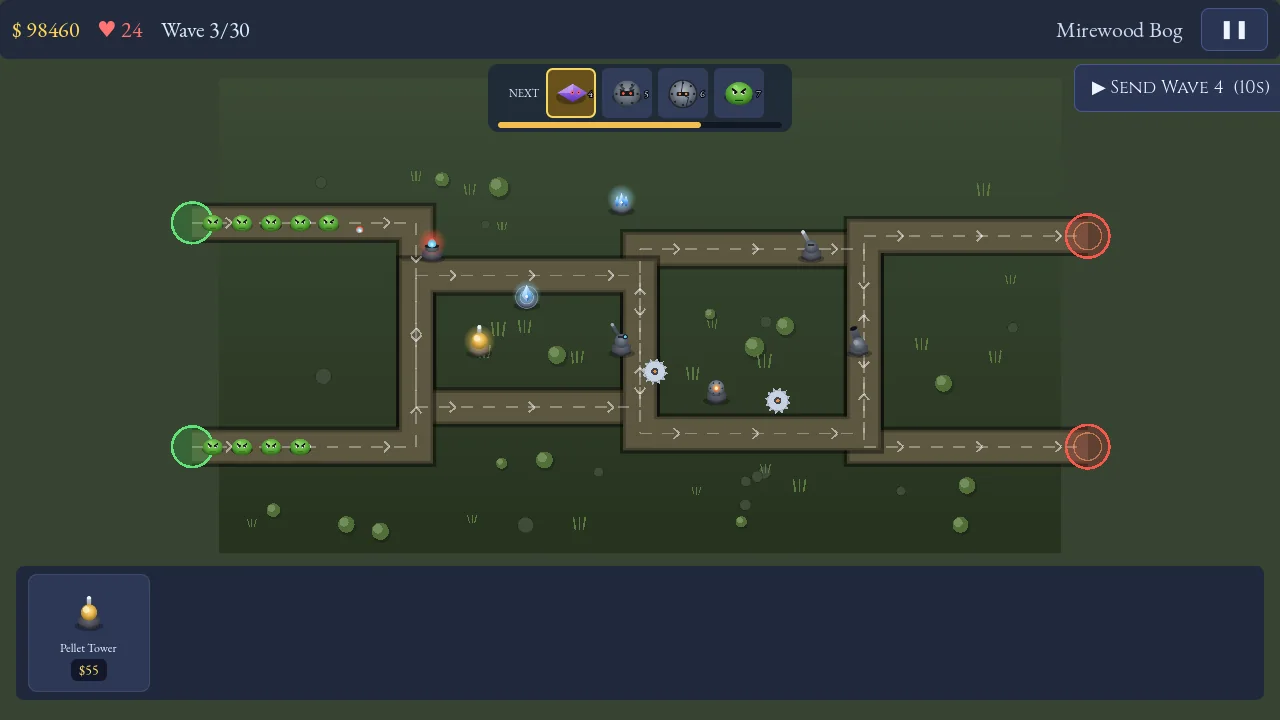
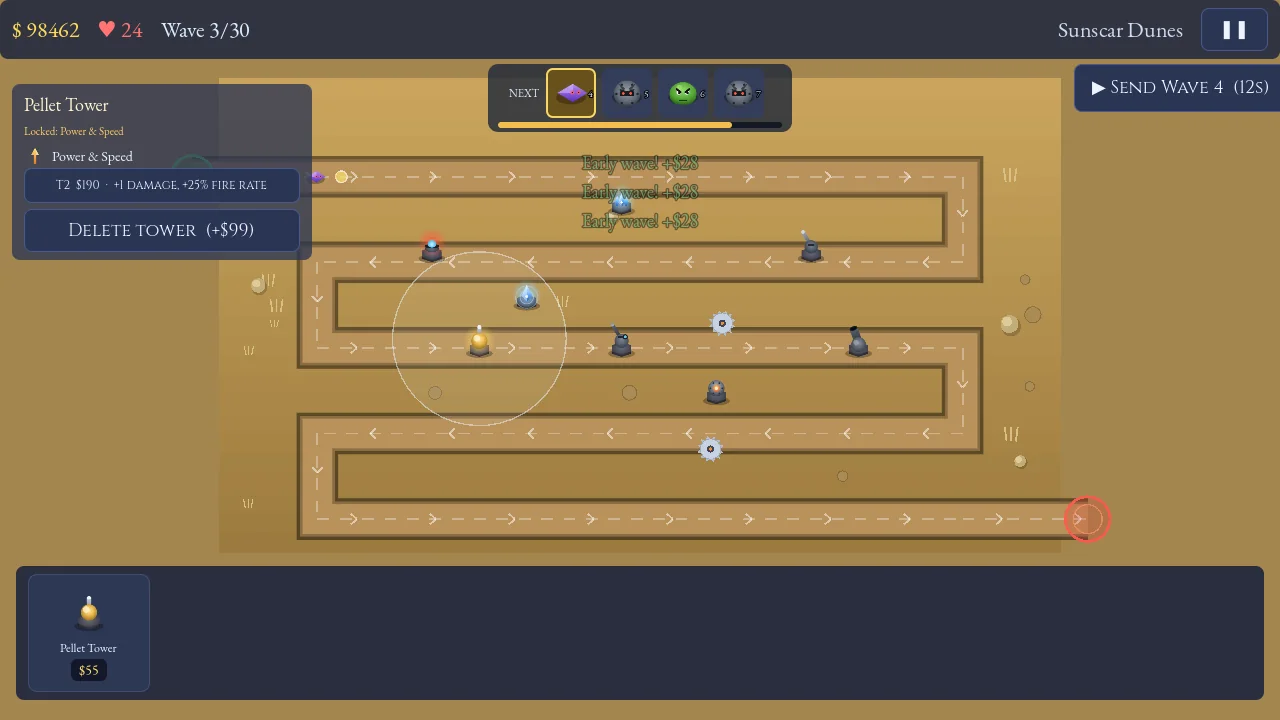
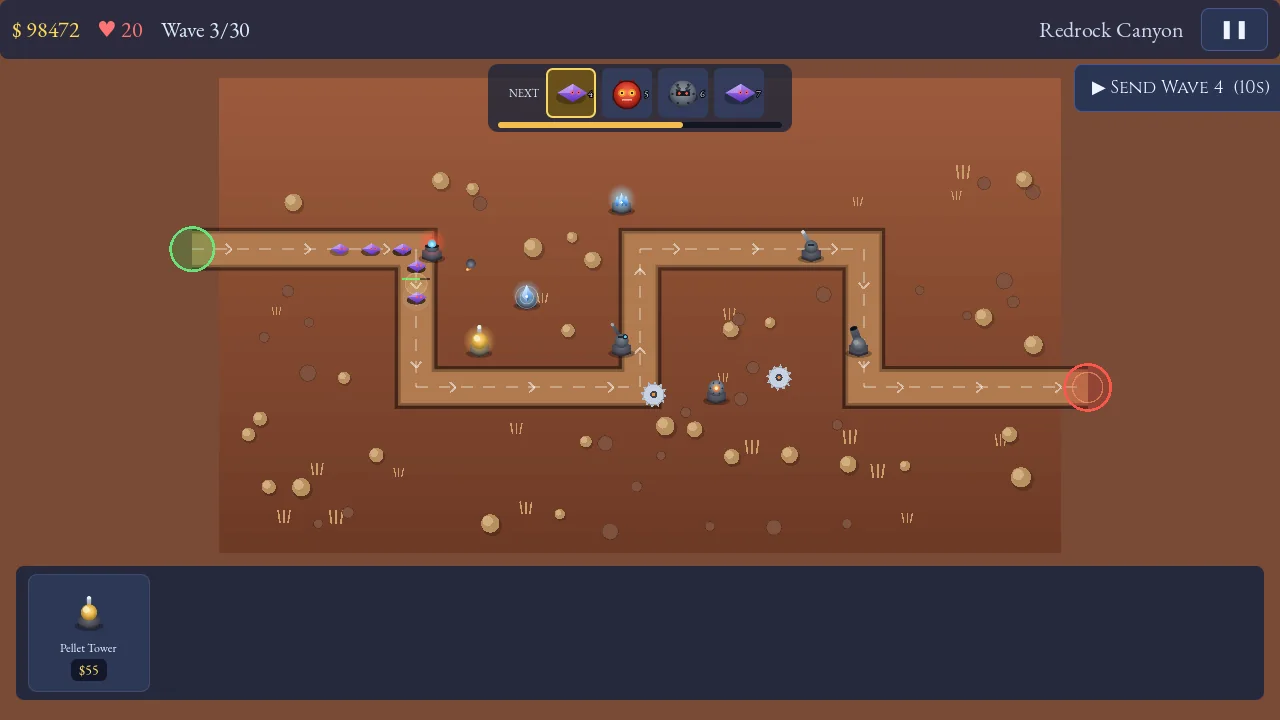
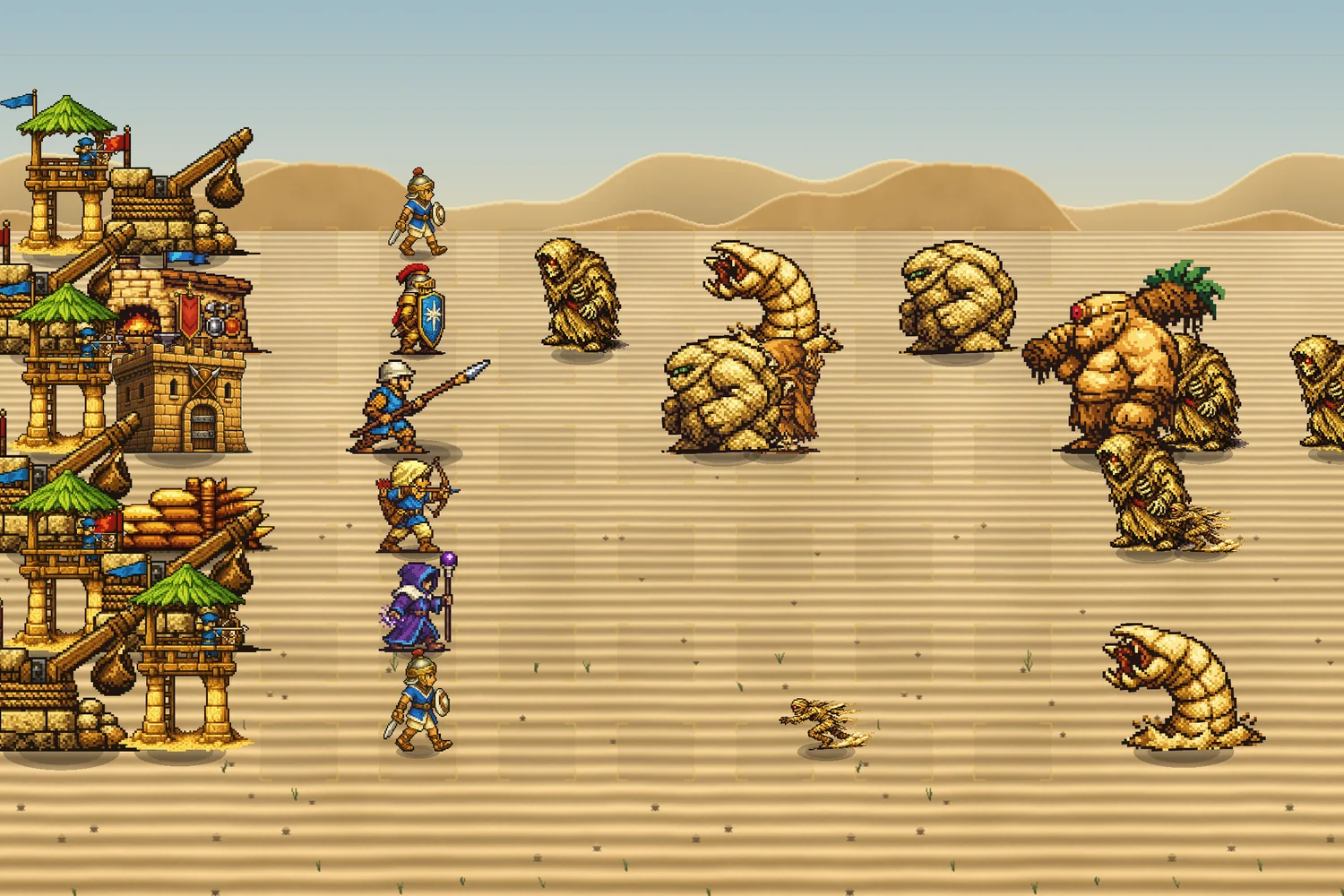
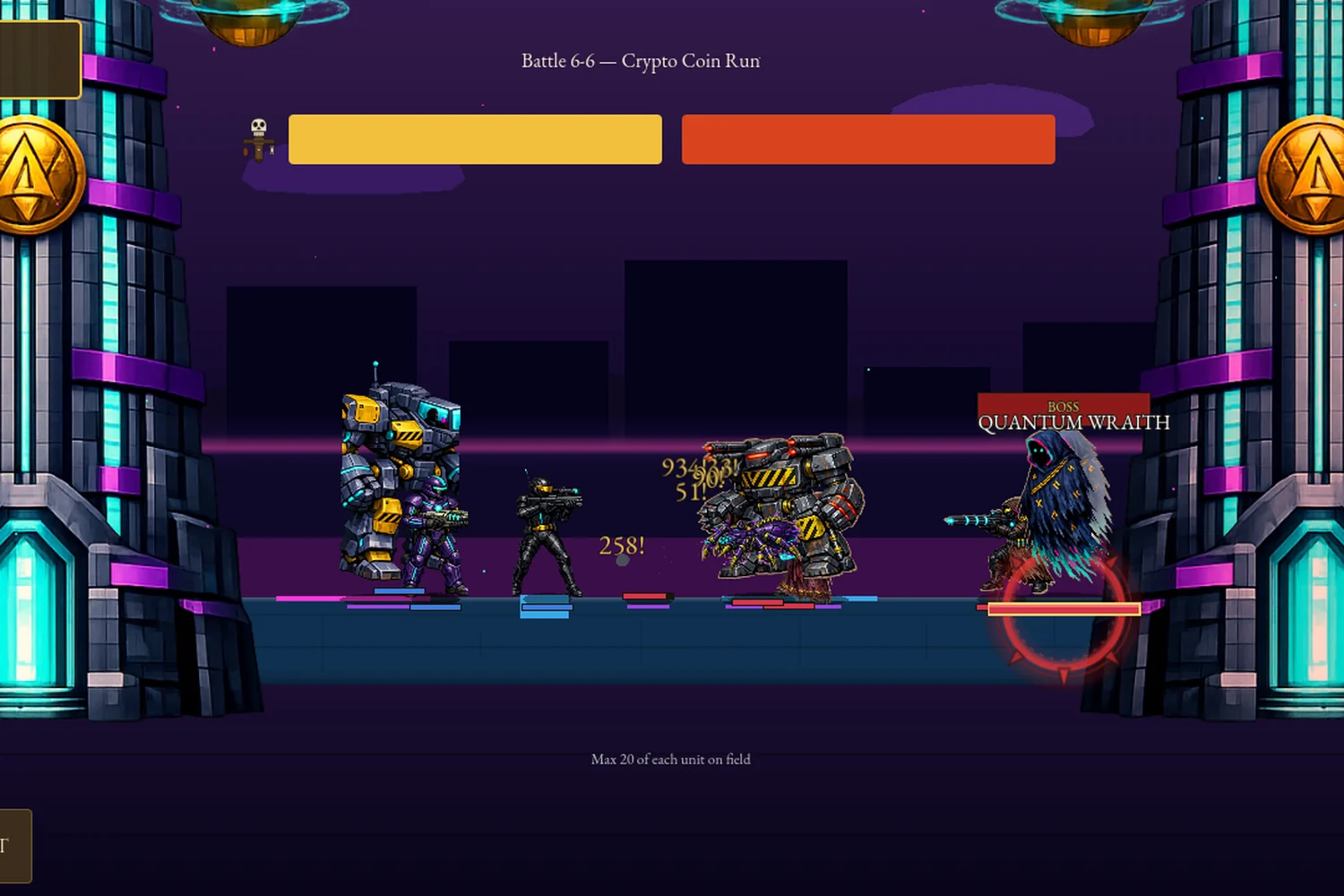
Tower Onslaught is a path-defense game in the spirit of Bloons TD and Desktop Tower Defense. Enemies wind along a road from the gate to the portal; you build off-road towers to stop them. Eight towers, each with two mutually-exclusive upgrade paths, unlock permanently as you climb the waves. Eleven biomes, a Normal/Hard split, and a hidden finale against the Cosmic Leviathan.
Screenshots
Build off-road towers along the path
Each tower has two upgrade paths
Stop the onslaught across every map
How to play
Controls
Place a tower: drag a tower up from the bar and drop it on an off-road tile.
Upgrade: click a placed tower to open its panel, then pick one of the two upgrade paths.
Sell: open a placed tower's panel and hit sell for a partial coin refund.
Wave button: start the next wave early for a bonus payout.
Tips & strategy
Cover the longest straight road segment — towers want their kill window in their attack arc. Hairpin turns are wasted on long-range towers; put splash and slow there instead. Commit to one upgrade path per tower; the trees diverge hard and a half-upgraded tower is half the tower. On Hard, you'll need a slow source by wave 10 — pick a frost or glue tower early and route the whole map around it.
Fullscreen
Hit the Fullscreen button in the bar above the play area to expand. To exit, press Esc (or swipe down from the top edge on touch) and tap the Exit button that slides in.
Tower-defense notes
Core decision
Tower Onslaught is a classic tower-defense test: where do you spend limited money so that every shot matters? The best placements cover bends, overlap with slows, and keep firing for as much of the enemy path as possible.
Wave planning
Do not spend down to zero before you know what the next wave contains. A small reserve lets you answer armor, speed, or swarm pressure without selling your whole plan. Upgrade towers that already have good coverage before building new ones in weak positions.
Why play this one
Choose Tower Onslaught when you want a clean tower-defense baseline. It is less about gimmicks and more about fundamentals: range, timing, target priority, and learning how each enemy type stresses the layout.