Defend the Dune — a free maze-style desert tower defense
Tower DefenseStrategyPuzzle
About the game
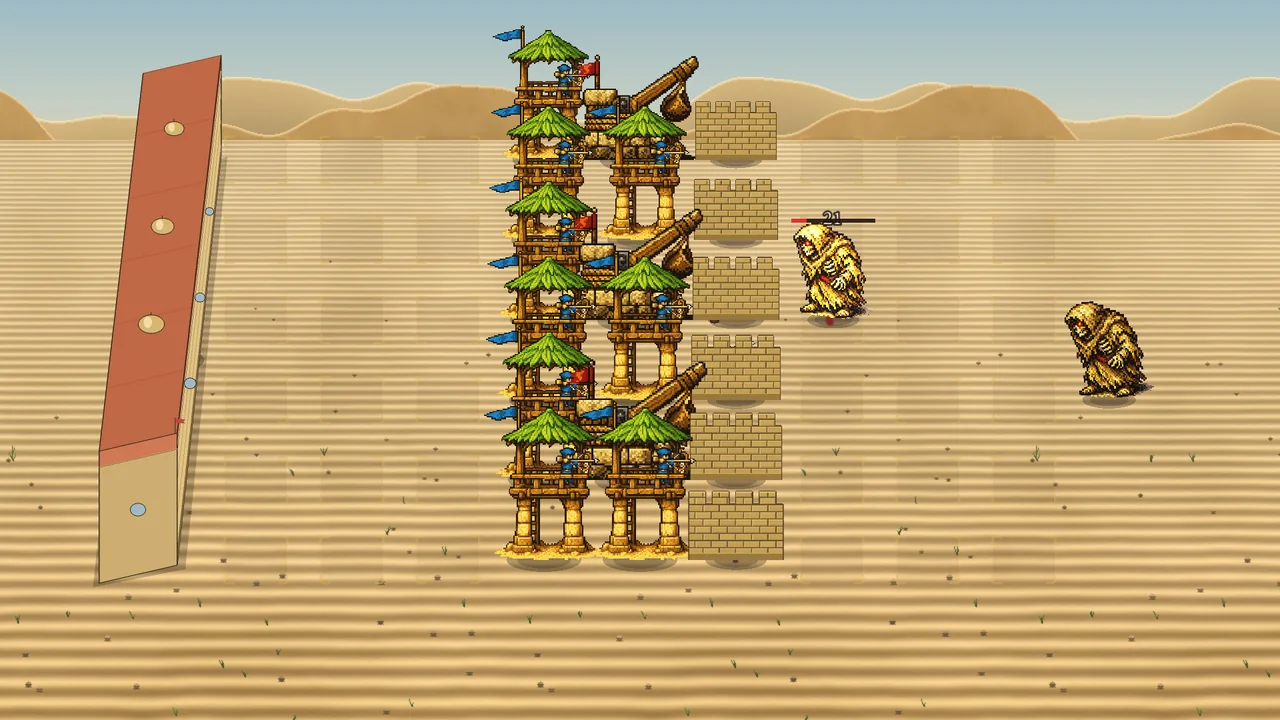
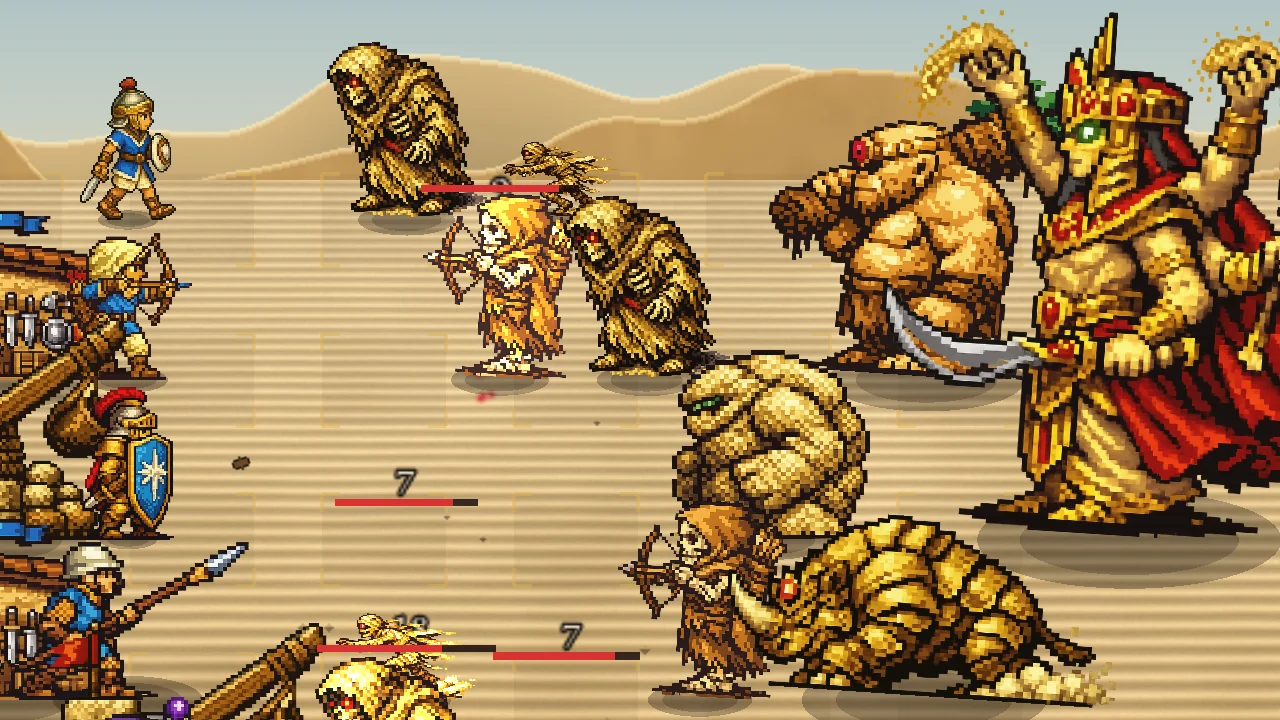
Defend the Dune is a maze-style tower defense set on a sun-bleached oasis. Desert nomads and sand monsters close in from the edges of the map — plant nine tower types across four difficulty tiers in either left-to-right or top-to-bottom maze layouts, and bend the enemy path into your kill zones.
Screenshots
Build your maze of towers
Bend the sand-monster wave into your kill zone
How to play
Controls
Place a tower: click or tap a tower in the build tray, then click/tap an empty tile.
Upgrade your towers: clear a boss and every 10th wave to drop a glowing cyan gem onto the field — tap it to level up every tower at once.
Start a wave: press the wave button — start it early for a coin bonus.
Tips & strategy
The map is a maze — long paths are kill zones. Force enemies into hairpin loops by stair-stepping your towers instead of lining them in a row. Splash and slow towers shine at the start of a corridor where the whole wave is packed in. You can't hand-upgrade towers anymore — every level-up comes from the cyan upgrade gems that drop on bosses and every 10th wave, and each gem levels your whole board at once. So spend coins on coverage: the more towers you have on the field, the more value you bank from every gem.
Fullscreen
Hit the Fullscreen button in the bar above the play area to expand. To exit, press Esc (or swipe down from the top edge on touch) and tap the Exit button that slides in.
Designer notes and strategy
Maze value
Defend the Dune is about path length. A tower placed one tile farther from the entrance can be stronger than a flashier tower if it forces the wave to walk through the same firing arc twice. The best mazes look almost inefficient until you notice how long enemies spend inside slow and splash coverage.
Tower planning
Open with reliable single-target damage, then add slow or splash where the route turns. Avoid building long straight walls that give enemies a clean march to the exit. Stair-step the path and keep adding towers — every cyan upgrade gem levels the whole board at once, so a fuller field turns each drop into a bigger power spike.
Why it is useful for players
The game teaches tower-defense fundamentals in a compact desert setting: route control, choke points, and upgrade timing. That makes it a good next stop after Bulwark if you want less action timing and more board-state planning.