
Marble Skyway's big update: forty levels, two worlds, one screen
· 8 min read
By Phil · building Legitsauce
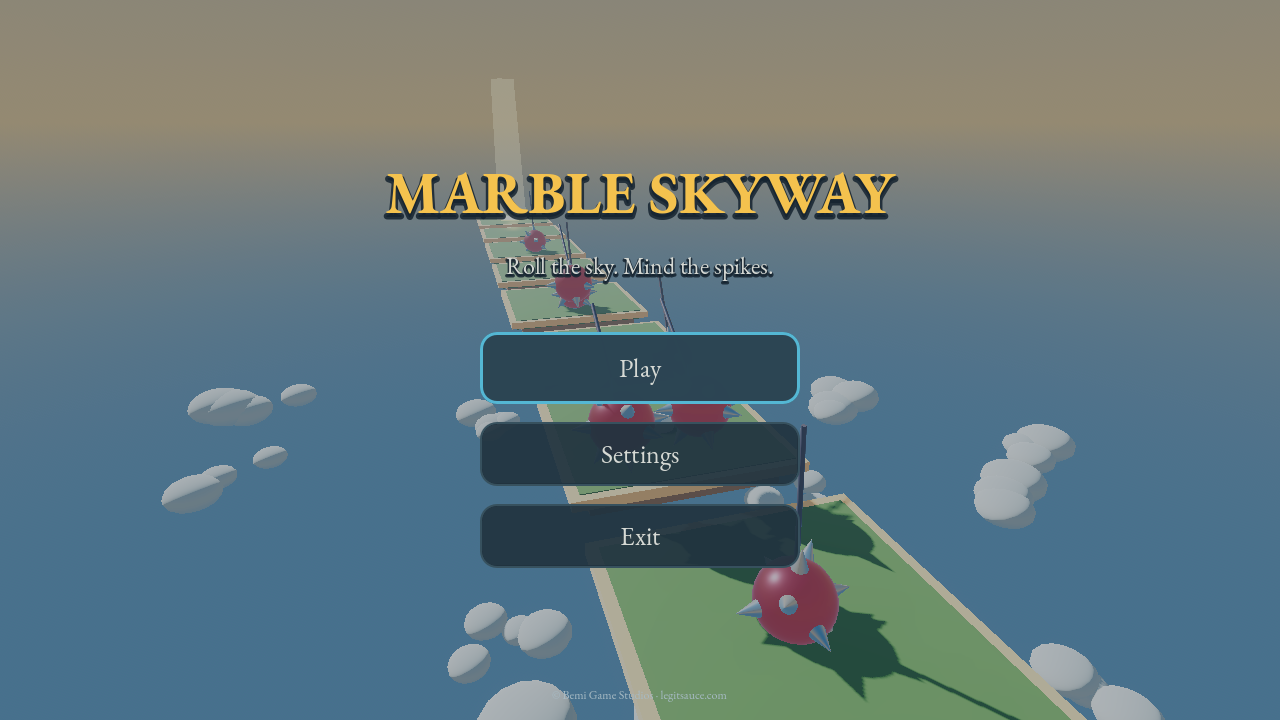
Marble Skyway is a game about one satisfying thing: rolling a marble down a floating course and reaching the glowing goal at the far end. You steer with the arrow keys or a thumb-stick, you gather speed on the ramps, and you try to hold your line while the sky throws swinging hammers and spinning blades across the track.
It just landed its biggest update so far. The campaign is now forty hand-built levels across two worlds, rebuilt from scratch, and the level select got torn down and put back together as a single screen you can thumb through with one hand. The short version: it plays better, and it has become a proper pocket game for a bus ride or a five-minute coffee break, the kind of thing you open to test your reflexes for a minute and then set aside.
Here is the whole update, world by world.
Momentum is the whole game
The first thing I rebuilt was the feel. The old courses were flat platforms with gaps between them, and they played about as flat as they looked. The new ones are built on ramps, and speed became a currency you earn and spend.
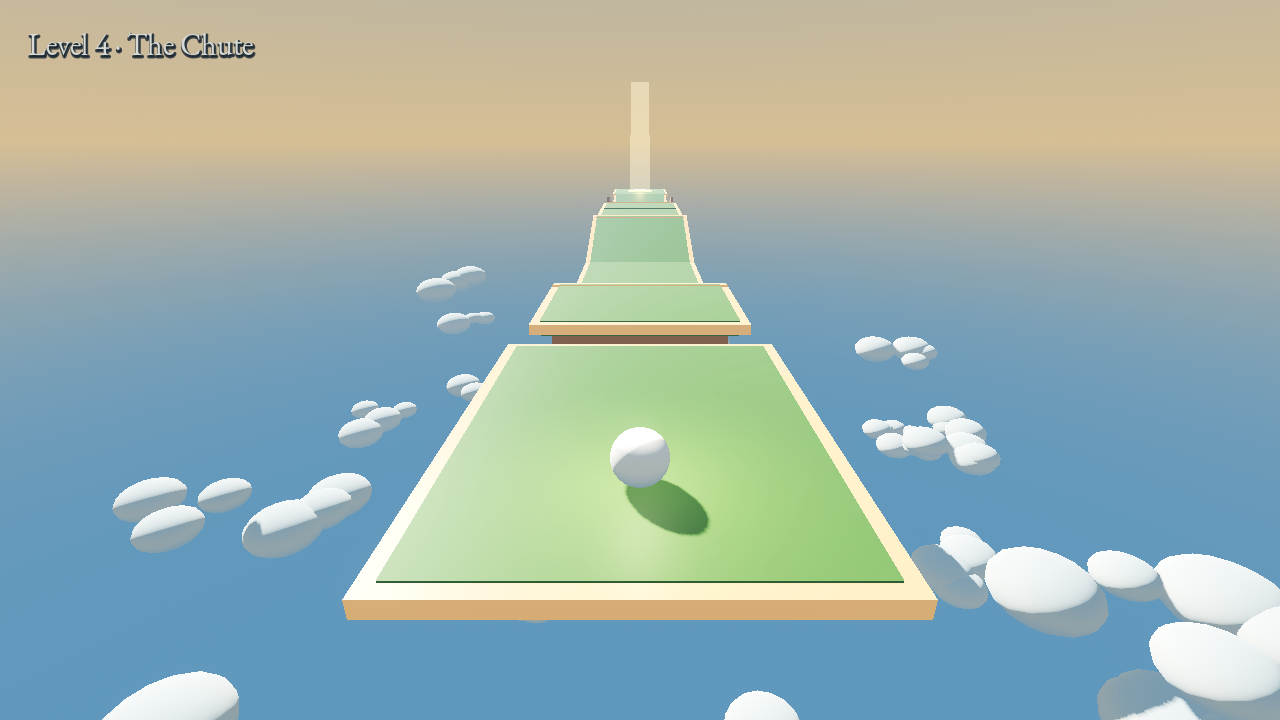
Every course now flows down through chutes and back up over launch ramps and rollers. Hit a downhill run with a boost pad on the lip and you fly off the end fast enough to clear a gap a standing jump could never reach. Take that same gap slow and you drop into the clouds. That one rule, your speed at the top of a ramp deciding where you land at the bottom, comes straight out of Marble Madness, and it turns each level into a little momentum puzzle you solve with your hands.
Teach a toy, then turn up the heat
The forty levels follow one rule. Introduce a mechanic on its own, give you a few beats to get comfortable, then bring it back tangled up with everything you have already learned.
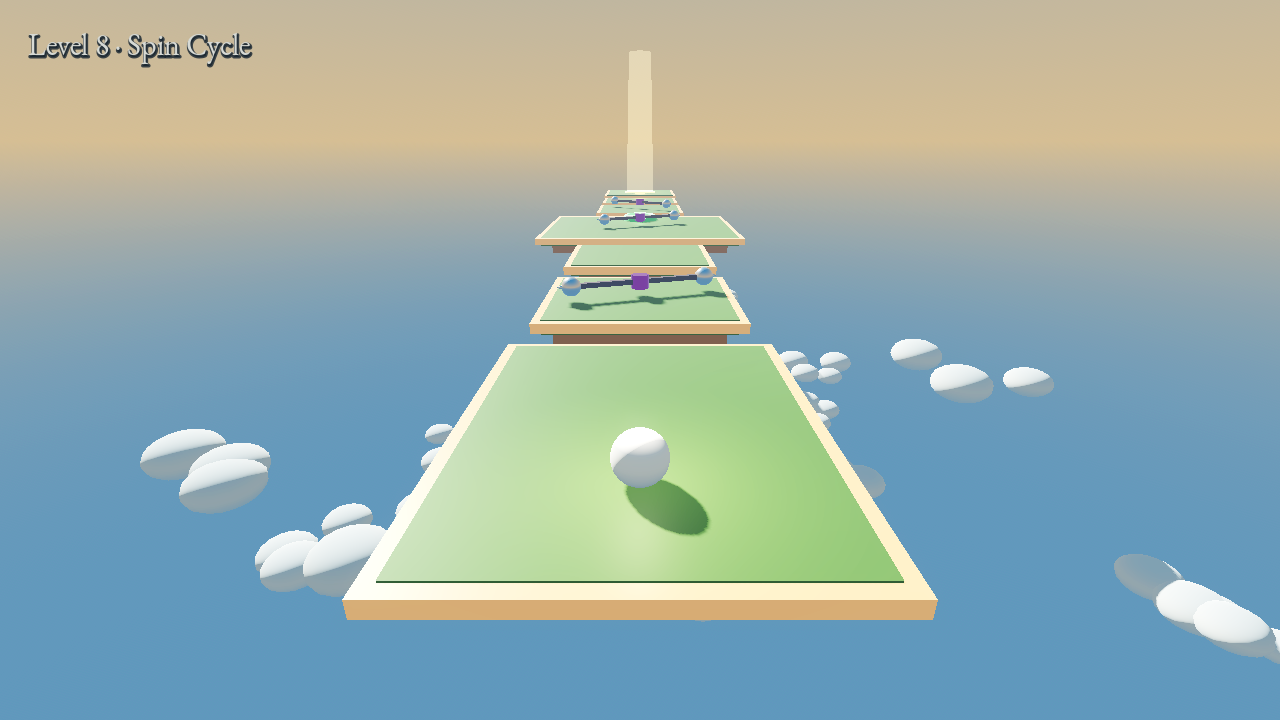
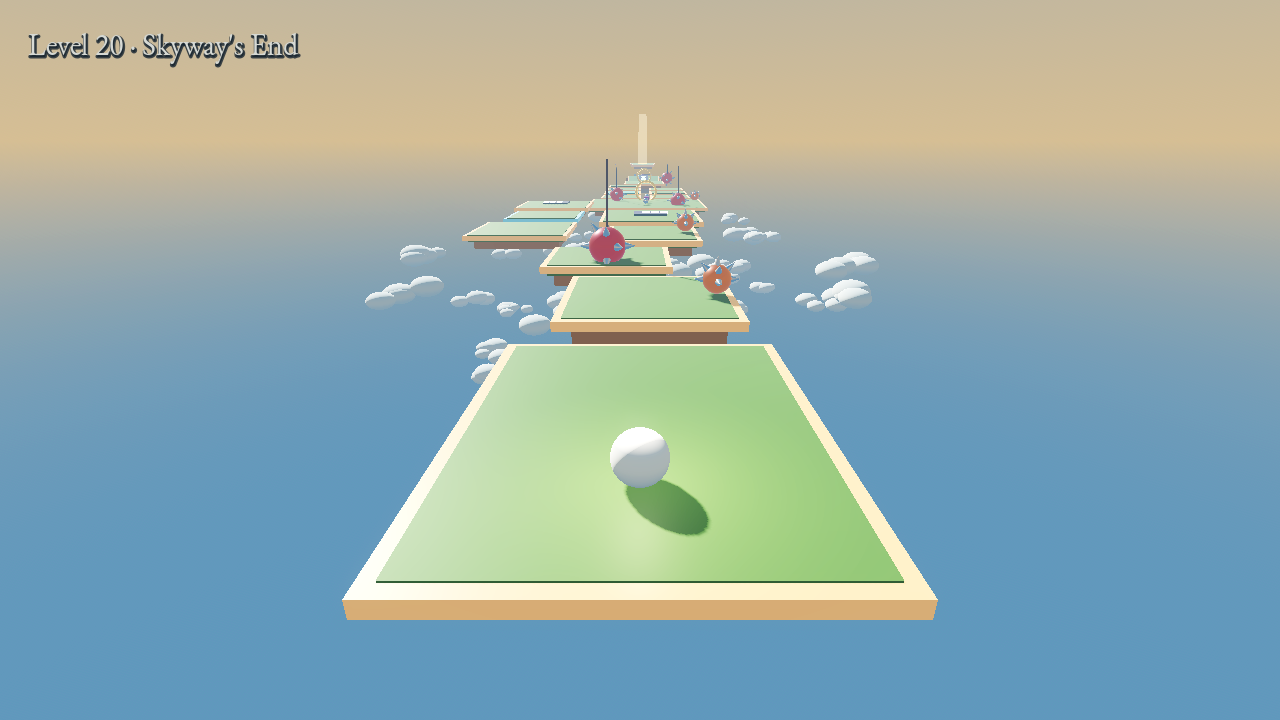
Swing Shift, level 2, is a wide deck and a single swinging spike ball, so you learn to read its arc. A few levels on, Spin Cycle has you threading spinners across an open plaza. By Spike Storm the whole sky is blades and boost pads and crumbling decks at once, and Skyway's End, the world's finale, hands you every trick in one long roll.
The full toy box for the sky: swinging spike balls, sliding spikes that rake across the deck, spinners that sweep a full circle, bounce pads that launch you skyward, boost pads that sling you forward, decks that drift on a current, and decks that crumble a beat after you land on them. Each one gets a level to itself, then keeps coming back in tougher company.
Two worlds: the sky and the void
At level 21, the floor drops out of the world. The back twenty levels, the Space arc, swap cerulean sky and soft clouds for a black void, decks rimmed in electric cyan, and planets turning slowly in the far distance. The whole mood tips from warm afternoon to cold and quiet, and the soundtrack tips with it.
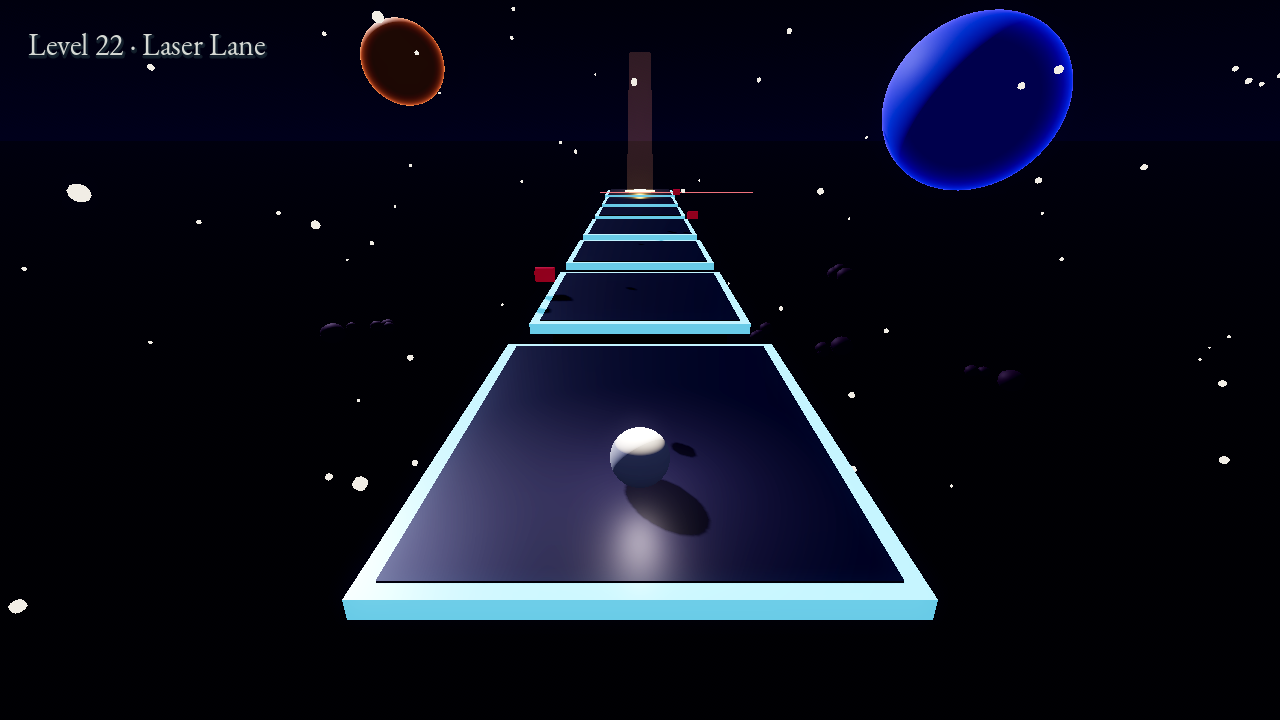
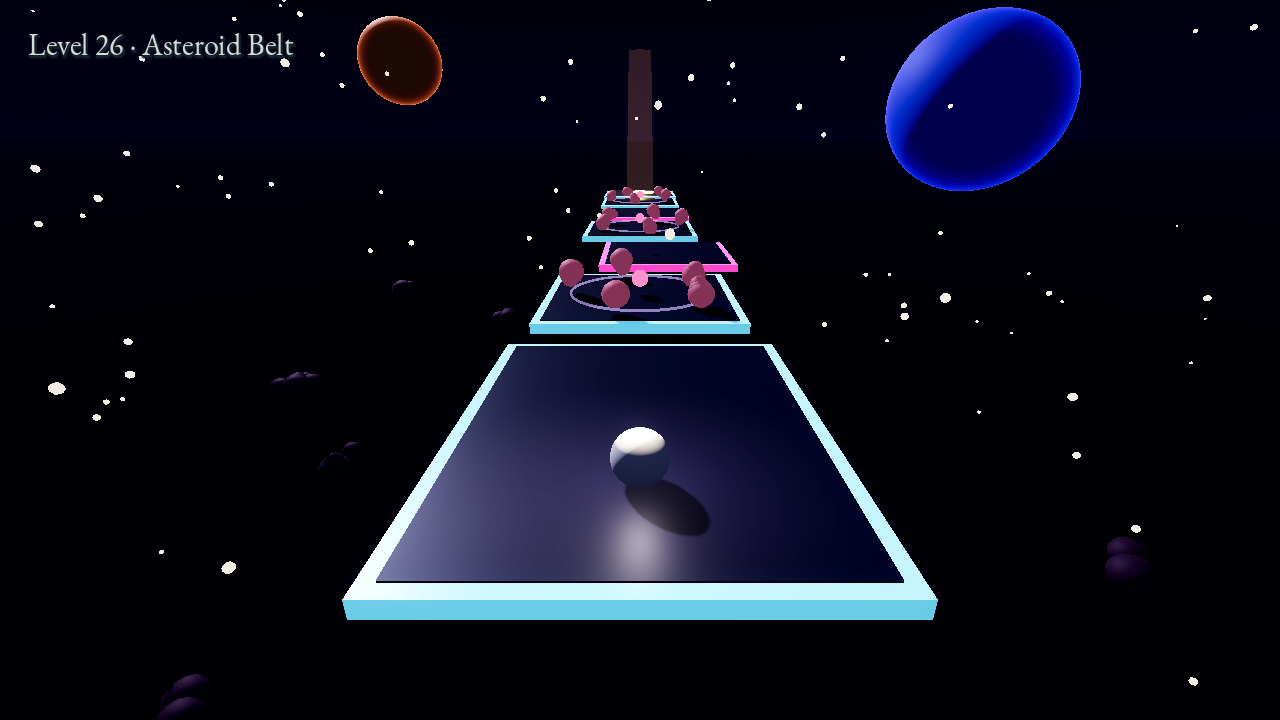
Space brings a second toy box. Laser blasters bolt onto the deck edge, paint a red warning line, then rake a beam across the track. Meteorites drop a shadow to telegraph the hit, then crash down on a slow cycle. Gravity wells pull you toward their center, so you need enough speed to slingshot past before they drag you in. Ring blades orbit overhead like small asteroid belts. And warp gates come in pairs: roll into one and you pop out of its twin carrying every bit of your speed, which turns some gaps into shortcut puzzles and one late jump into a ring you thread at the peak of your arc.
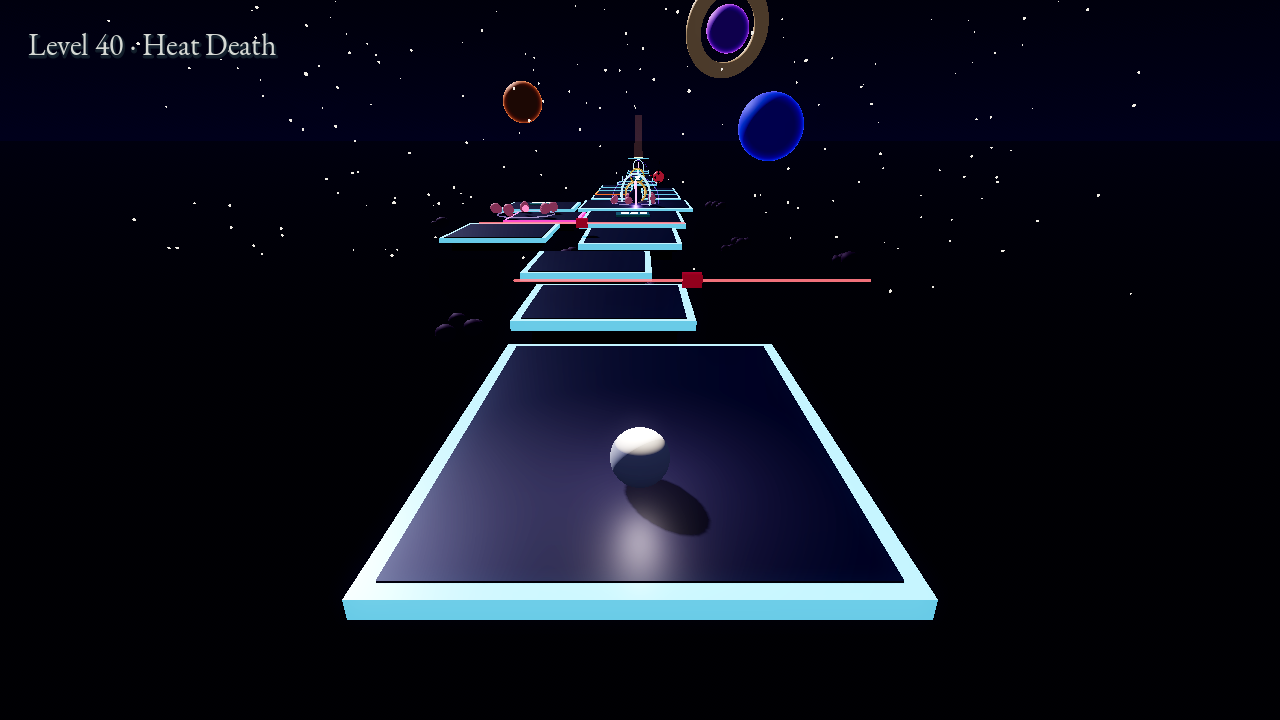
Heat Death closes the campaign out. It is the Space arc's answer to Skyway's End: every space toy, every set piece, one long nervous roll through the dark.
One screen for the whole campaign
This is the piece I shipped this week. The old level select asked you to pick a world first, then drill into a grid of twenty levels. Getting anywhere took two taps, and the two worlds never sat side by side.
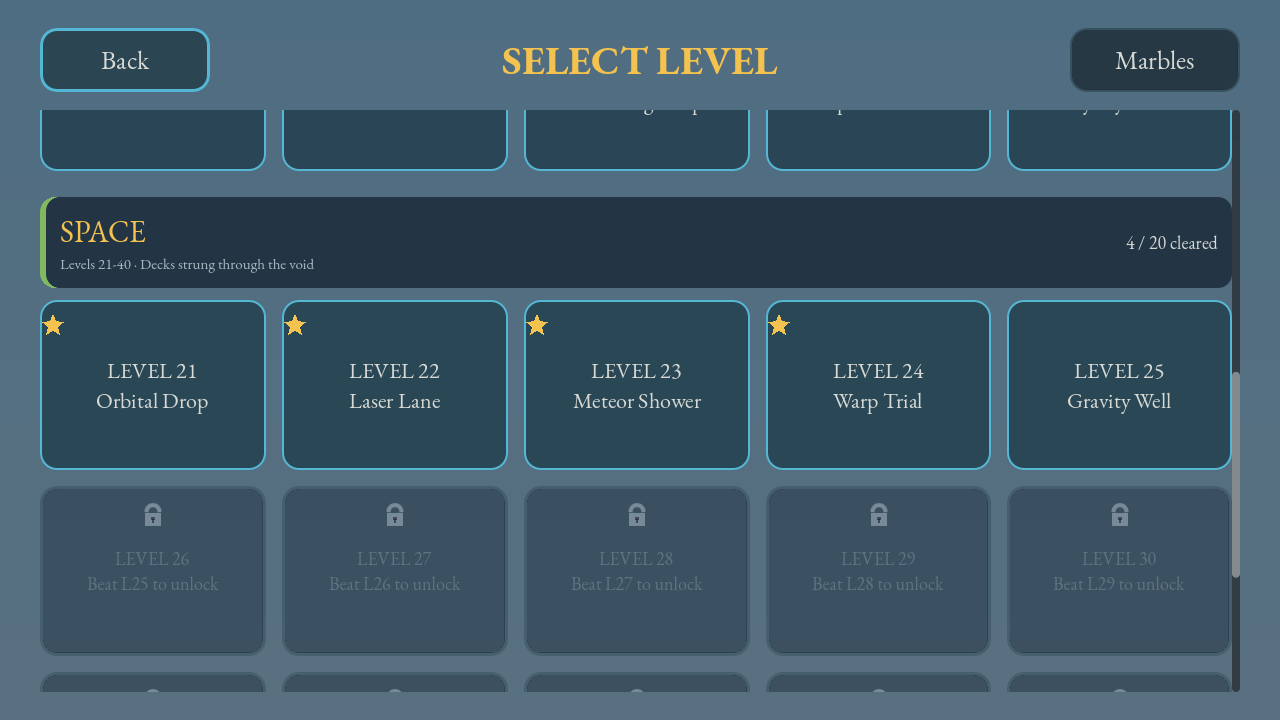
The whole campaign now lives on one scrolling screen. A SKY header sits above its twenty levels, a SPACE header sits above its twenty, and you flick from the first roll to the last in a single motion. Cleared levels wear a gold star, the level you are up to glows, and every locked level tells you which level opens it.
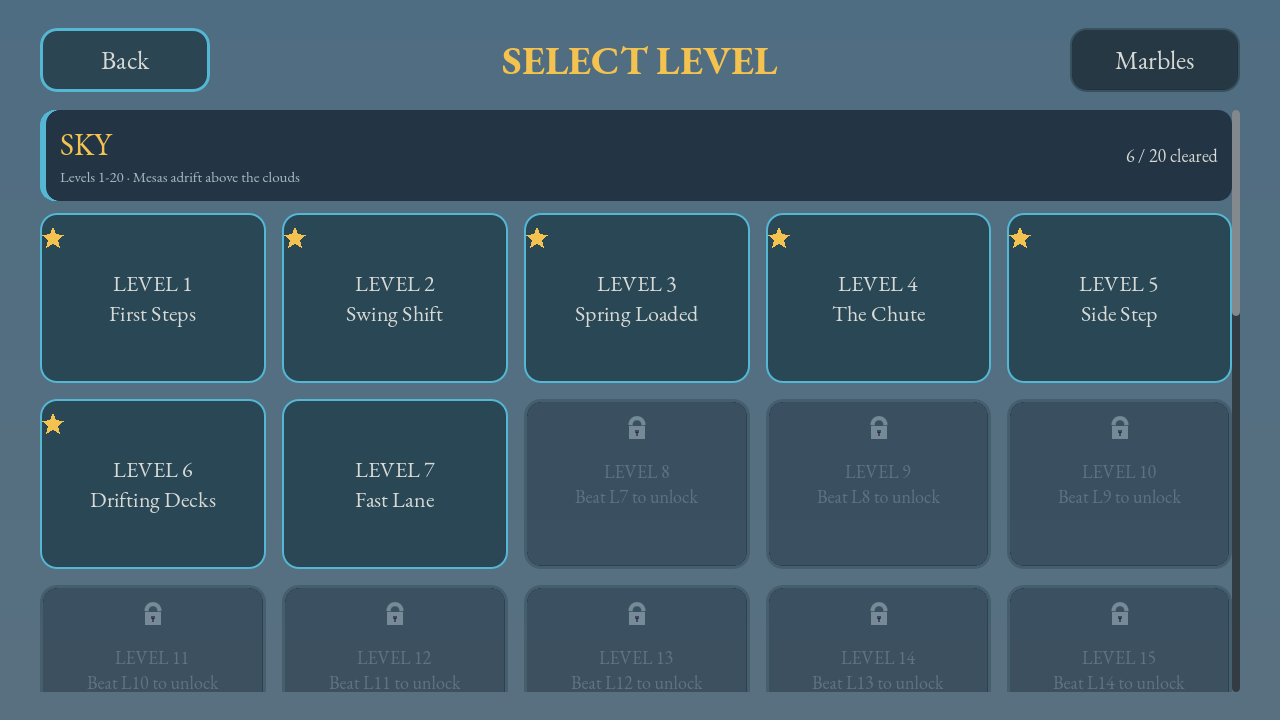
On a phone, it behaves the way a phone screen should. Drag anywhere, on a tile or a header or the gap between them, and the list slides under your thumb, while a quick tap still drops you straight into a level. I spent real time on that single detail, because a level list you cannot flick through is a level list you quietly resent. On a keyboard it holds up too: Tab and the arrow keys walk the grid, and the view scrolls to keep your selection in sight, so the whole game plays without a mouse.
Built for the gaps in your day
I reach for Marble Skyway in the small gaps. A level is a short, contained roll, a minute or two once you know it, so it slots into a bus ride, a queue, a coffee that is still too hot to sip. You can clear one and put the phone away with nothing left hanging.
A few choices protect that feel. Every level is deterministic, so the spike ball that clipped you last time swings on the very same beat this time, and learning that beat is the whole skill. Longer courses lay down a checkpoint or two, so a slip near the finish costs you seconds. And the difficulty climbs slowly enough that you spend most of your time right at the edge of what your reflexes can handle, which is exactly where a game like this earns the minute you gave it.
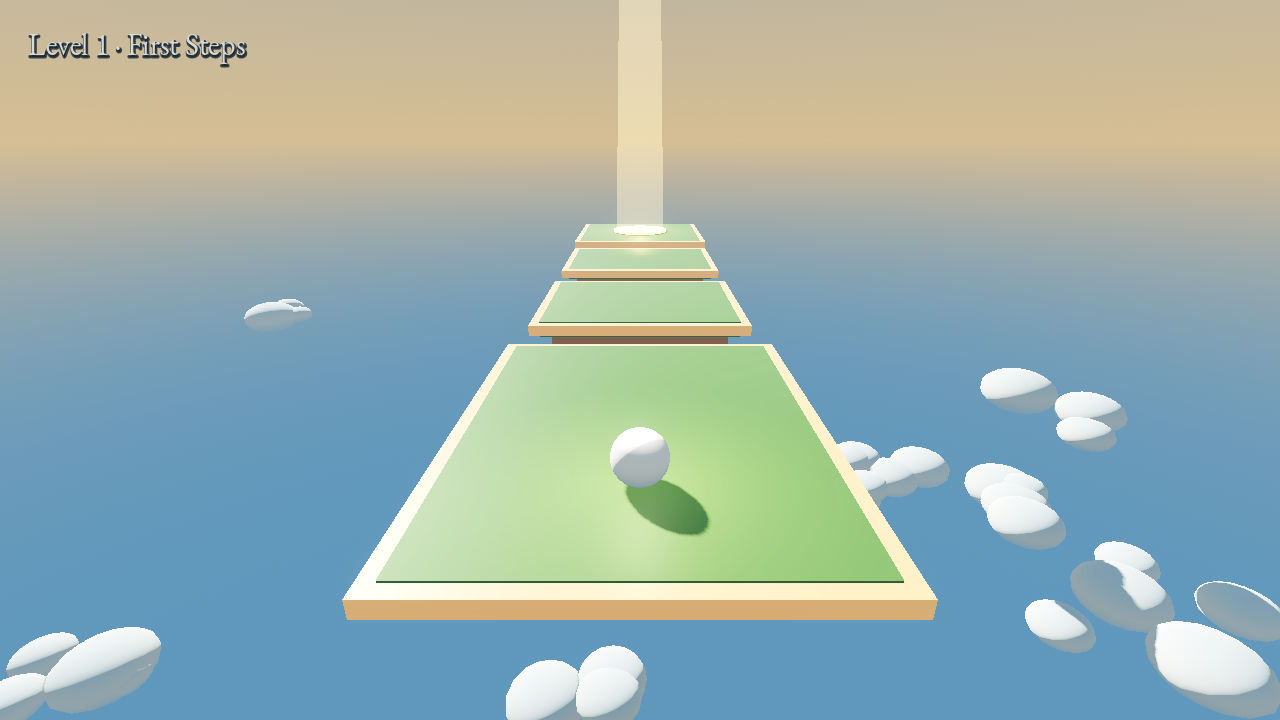
Under all of it runs a quiet reward. Clear levels and you earn new marble skins, from the starting pebble up through a set of brighter finishes. No currency, no shop, no energy timer. You play, you improve, you unlock, you play again.
Marble Skyway is free, runs right in your browser on a phone or a desktop, and installs nothing. Pick a level, roll the sky, mind the spikes: play Marble Skyway free in your browser. Best taken one level at a time, whenever you have a minute to spend.