
Making Siege of Ages: Heroes of Might and Magic III crossed with an idle game
· 5 min read
By Phil · building Legitsauce
Every game on Legitsauce starts as a collision between two things I love. For Siege of Ages it was Heroes of Might and Magic III running headlong into idle games.
Which probably sounds like an odd couple. HoMM3 is a 1999 turn-based strategy epic, the sort of game where one map can eat a whole evening. Idle games are the reverse, ninety-second check-ins where the numbers tick up. But boil each one down to the thing that actually has its hooks in you and they sit a lot closer than you'd think.
What I stole from Heroes III
The thing that kept me up till 2 a.m. with Heroes III (still alive and selling on GOG twenty-seven years later, which tells you something) was never the tactical battles. It was the army-building loop. Ride back to town, see which new dwelling you can afford, recruit a stack, watch your doom-army get one notch scarier, do it again. The famous "one more turn" pull is really "one more upgrade" wearing a disguise.
And the fantasy underneath it is the long climb from humble to ridiculous. You open the campaign scraping together a handful of pikemen and close it fielding angels and black dragons. The power curve is the story.
What I stole from idle games
Idle games understand pacing in a way big-box strategy never bothered to. The good ones pay you off on a strict clock: something drops within seconds, something unlocks inside a minute or two, something structural shifts within the half-hour. Siege of Ages bakes that in as a hard rule. Coins drop within ten seconds of you pressing Play, a new card or upgrade shows up inside ninety seconds, and a brand-new save reaches its first age-up within thirty minutes.
The collision: seven ages
Mash those together and you've got the spine of the thing. It's a side-on lane battler. You spawn units from your base on the left, they march right, and every coin feeds a persistent meta-economy that hauls your civilization through seven ages: Dark, Feudal, Castle, Industrial, Modern, Quantum, and finally Planetary, where the caveman cave has become a ringed citadel in orbit. Eighty-four campaign levels, with a three-phase fight against the Cosmic Leviathan at the end of them.
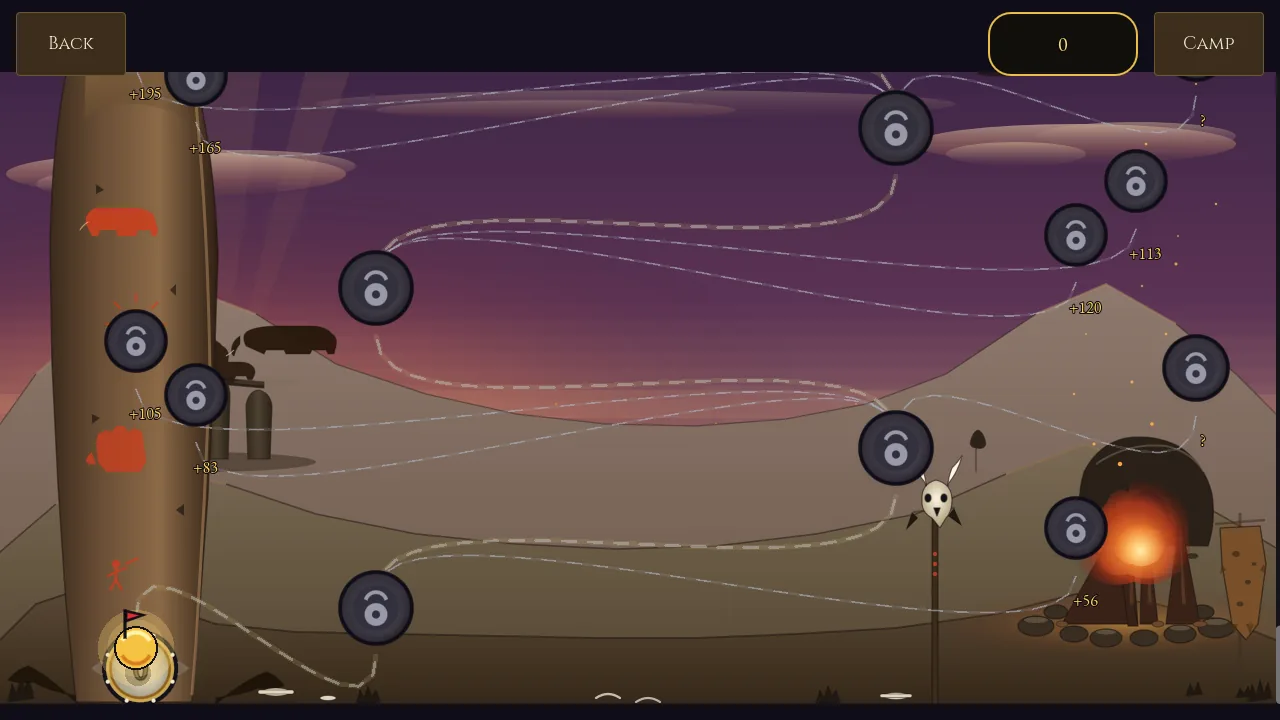
My favorite rule in the whole design is that units never auto-retire. A club-swinging caveman you spawned back in level 4 can still be out there in level 80, bonking a plasma walker, right up until he finally dies in battle. The anachronism is the joke and the strategy at the same time. Old units stay relevant through stacked upgrades and sheer numbers, not because the game babies them. A knight, a caveman, and a plasma trooper holding one lane shoulder to shoulder is the HoMM3 doom-stack fantasy squeezed into a browser tab.
How it was actually built
I'm one person, so the production pipeline matters about as much as the design does. Two AI tools did a lot of the lifting.
Art: GPT image generation. The unit, enemy, and base art across all seven ages came out of GPT's image model, working off a design document that pins down every sprite to its silhouette and palette. The readability rule is that no two units in one age share a silhouette, so each one is recognizable at thumbnail size from shape and color alone. The generated art still needed real post-processing, though. Every batch came back with the same warm yellow cast, so the whole set went through a gray-world auto white balance, dialed to 35% strength. (A full-strength correction shoved skin, leather, and bronze toward a blue tint that looked worse than the problem it was fixing.) AI gets you maybe 90% of the way, and the last 10% is still you, squinting at pixels.
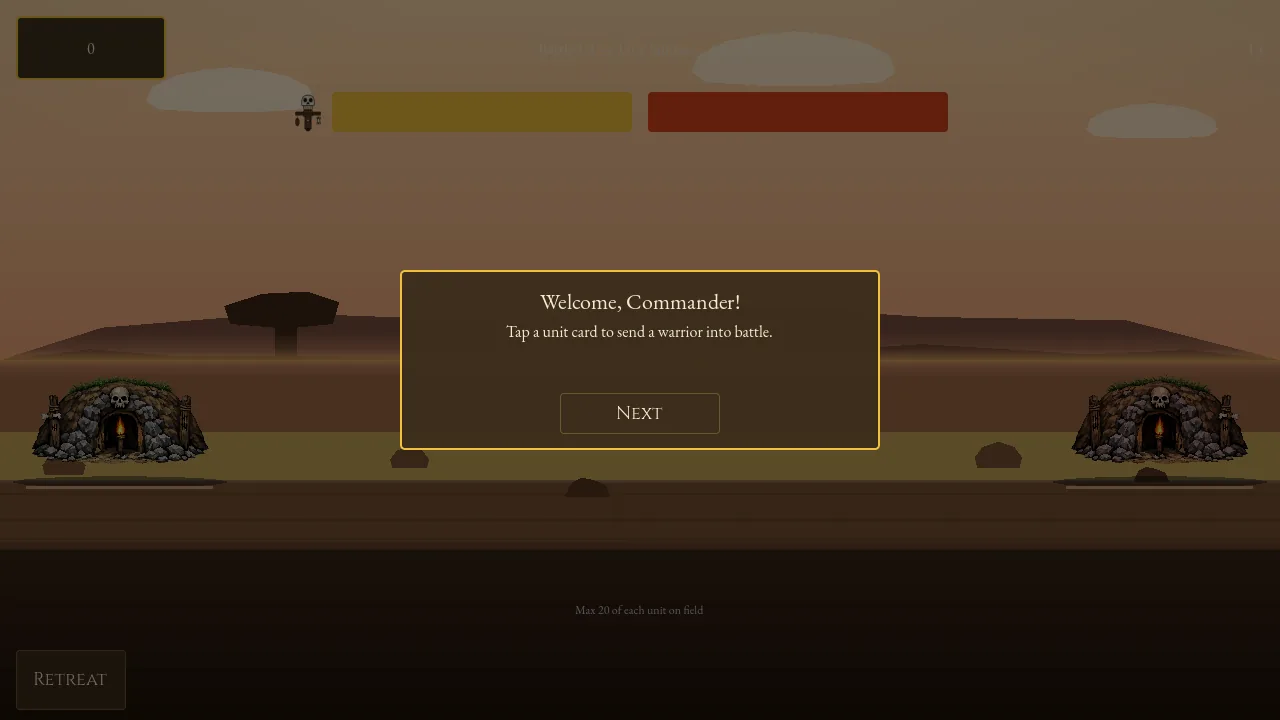
Code: Claude, plus my own hands. Most of the GDScript (the game runs on Godot 4.6, compiled to WebAssembly for the browser) was written by Claude against that same design document, with me doing the review, the integration, and the tuning passes no model can do for you: balance curves, input feel, the difficulty math that makes the final boss demand a real grind instead of folding to a fresh save. Every system ships with headless unit tests, and that's the part that makes the workflow safe. When the suite is green, AI-written code and hand-written code answer to the same bar.
Did the collision work?
Judge for yourself. Siege of Ages is free in the browser, no download, sessions of about three to eight minutes. My honest read: the HoMM3 itch is real in the meta-layer (the moment a new age unlocks its roster is pure "new dwelling day" energy), and the idle-game pacing keeps the early hours from sagging the way grand-strategy openings tend to. If you spent a chunk of your youth alt-tabbing out of Erathia, this one's for you.