
Making Helix Drop: designing a game for two minutes on the train
· 4 min read
By Phil · building Legitsauce
Most games are designed forwards, out of a fantasy. Be a wizard. Build an empire. Helix Drop got designed backwards, out of a constraint: be worth opening for two minutes on a standing train.
That sounds like a modest little goal. It's actually savage, and it decided every other call in the game.
What "two minutes on the train" really demands
Picture the scene for a second. You're standing, one hand on a rail, phone in the other. You've got maybe two minutes, and any of them could be cut short by your stop, an announcement, somebody's elbow. What does a game have to be to earn that slot?
- One thumb, no precision. No joystick gymnastics, no multi-touch.
- Instant load. Ten seconds of loading screen burns 10% of the whole session.
- A full experience inside a minute. A run that needs ten minutes to get good is a run you'll never see the good part of.
- Interruptible without grief. Stop arrives mid-run? Pocket the phone. Nothing lost, no penalty, no "are you sure?"
- Readable with the sound off. Trains are loud and earbuds are optional, so audio has to be garnish, never information.
That's the brief. Helix Drop is whatever fell out of it.
The inverted control
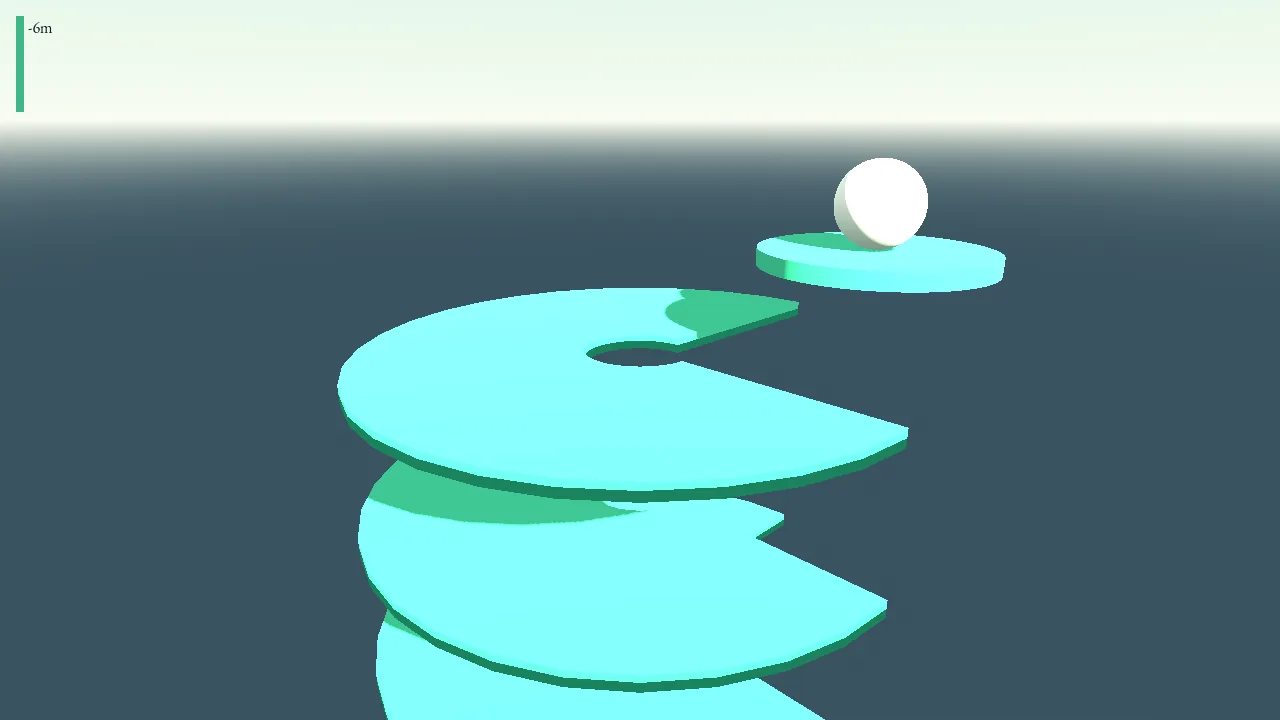
The setup: a ball drops down the inside of a tall helix tower. The trick that makes it work one-handed is that you don't steer the ball at all. You spin the tower. Drag left or right anywhere on the screen and the whole column turns around the falling ball. Line a gap up underneath it and physics handles the rest.
Flipping the control around like this (the idea traces back through Helix Jump and the other great one-thumb arcade games) just dissolves the standing-commuter problem. "Anywhere" drags mean there's no small target to hit while the train lurches. Your thumb never covers the action, because the action is the whole screen. And the whole input is one continuous value, rotation, so there's nothing to memorize. People understand it before they've consciously finished reading the rules.
Runs are 20 to 90 seconds, on purpose
A run of Helix Drop lasts about twenty seconds when you're bad at it and maybe ninety once you're cooking. That isn't the game being thin. It's the session math doing its job. Two minutes on the train fits one to four complete runs, so every commute hands you several full arcs: tension, a mistake or a triumph, a score, again. Try that with a game built on five-minute rounds and two minutes buys you two-fifths of an experience and a resentful tab-close.
The depth is in the risk dial, not the runtime. Take one gap at a time and you'll survive, slowly. Plunge through three or four levels in a single clean drop and the combo multiplier wakes up. So every moment poses the same quiet bet: the safe gap right under you, or spin two levels ahead, line up the long fall, and gamble on the red ring that ends your run the instant you touch it. Your best dive sticks around as a ghost line on the next go, which is about all the progression system a game like this needs. The only thing worth beating is yesterday's you.
What we left out
The discipline was less about what made it in and more about what stayed out. No energy system, because the train doesn't care how much energy you have. No daily-streak guilt. No ads between runs (nothing on Legitsauce ever interrupts play, but it matters extra here, where a 30-second spot would literally last longer than the run it followed). No tutorial, because a game this small that needs one has already lost. There isn't even a confirmation box when you quit. Your stop is your stop.
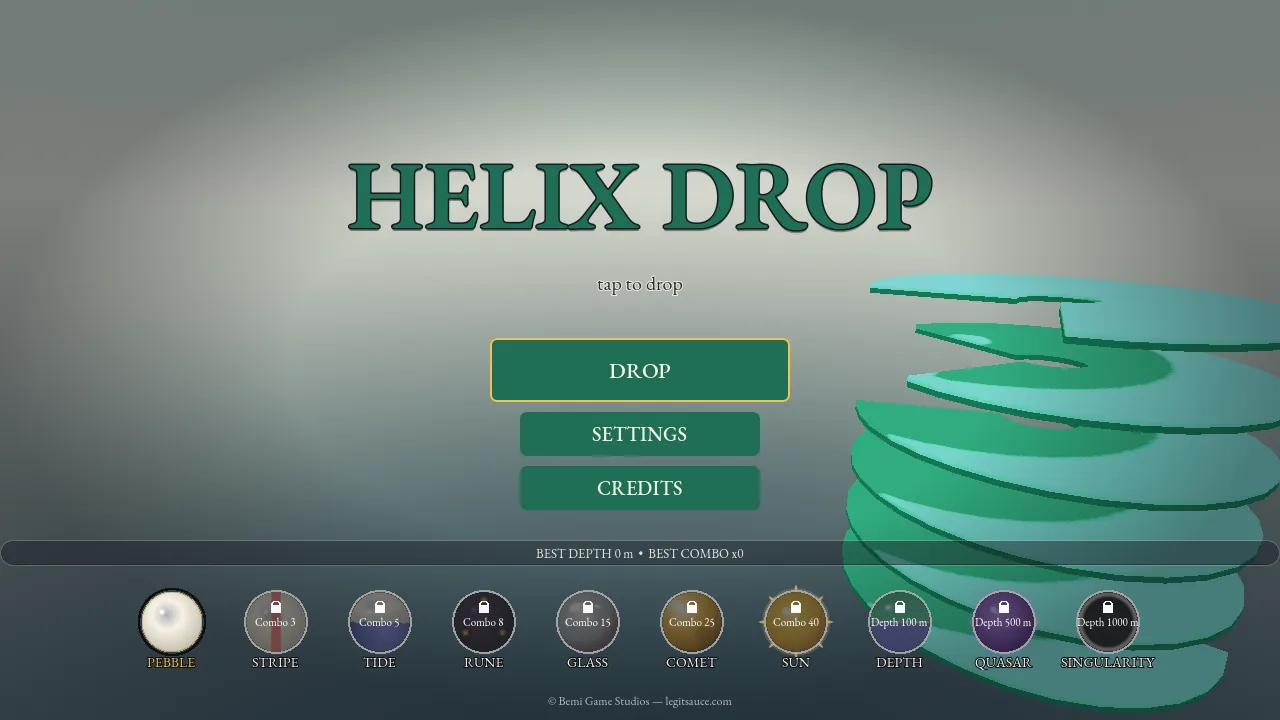
It's a small game and it knows that about itself. But small, instantly there, and honest is exactly the slot the app stores walked away from. It's two taps away: play Helix Drop free in your browser. Best played standing, one hand on the rail.