
Geometry Survivor: design notes on our take on the survivors genre
· 4 min read
By Phil · building Legitsauce
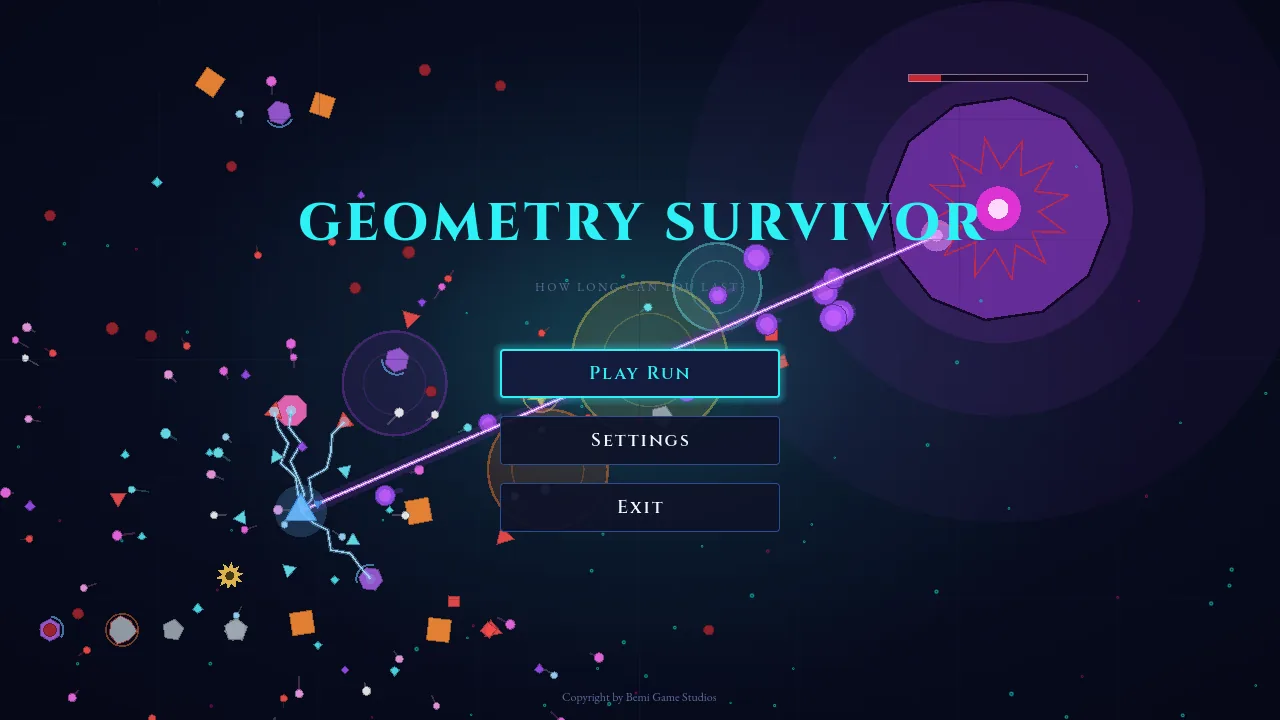
Geometry Survivor is our crack at the bullet-heaven survivors genre, and it doesn't hide where it comes from. It's a roguelite in the Vampire Survivors line, with a drafting philosophy lifted from Brotato, dressed up in clean neon shapes so it stays smooth on a phone.
One input, all decisions
The insight the genre is built on, the thing Vampire Survivors proved back in 2022, is that aiming was never the fun part of an action game. So it took aiming away. Your weapons fire themselves. What's left is positioning, and positioning turns out to be about the deepest single input in games. Every frame you're reading threat directions, gem locations, how close the wall is, and where the swarm will have moved to three seconds from now.
That's also why it suits a browser and a touchscreen so well. Geometry Survivor wants exactly one thumb. WASD or arrows at a desk, drag-anywhere joystick on a phone. There's no button you forgot about and no combo to drill. People get it in about five seconds, and dying to a bad build teaches them the rest.
What we took from each ancestor
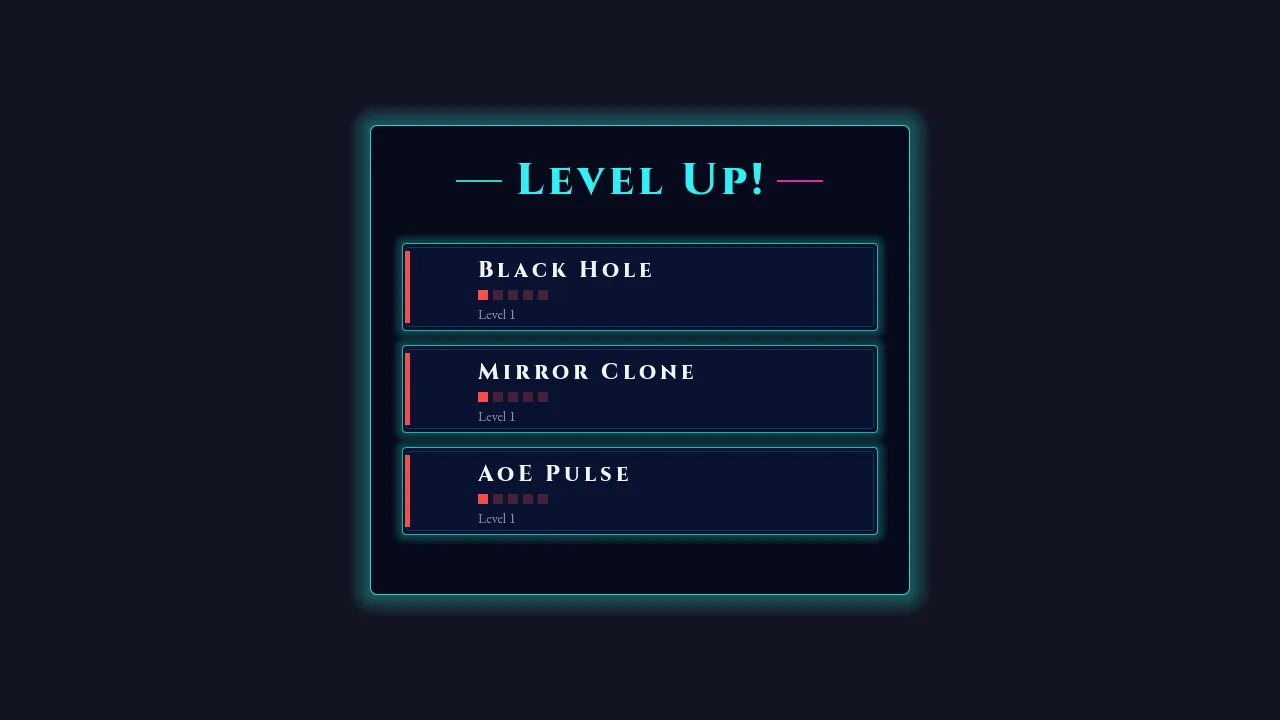
From Vampire Survivors: the core loop. The endless swarm, XP gems coming down like rain, level-ups that freeze the chaos for a calm three-card draft, the slow turn from prey into a walking apocalypse. That whole arc, fleeing in minute one and turning the screen itself into a weapon by minute ten, is the emotional payload of the genre, and we left it well alone.
From Brotato: discipline in the draft. Brotato's big idea was making builds committal. Dabble and the shop punishes you; go all-in on one stat identity and it pays off. Geometry Survivor's card pool is tuned the same way. Commit hard to a single synergy, all projectile-count or all crit, and you hit a power spike that the take-every-shiny generalist never gets near. The strategy lives in the draft. The field is where you find out whether you were right.
Our own ingredient: legibility. The "geometry" look isn't only a budget aesthetic. When every single thing on screen is a clean shape on dark neon, you can read a 200-enemy swarm in one glance, which counts double on a phone, where visual noise is what kills survivors games. Here the art direction is doing a gameplay job.
Strategy corner
A few tips that actually move your survival time once you're past the first handful of runs:
- Herd, don't flee. Enemies run at you in a straight line, so the shape of the swarm is yours to control. Kite them into a clump and your area damage gets far more efficient. A tight herd melts; a spread-out wave grinds you down. The good players are shepherds, not sprinters.
- One synergy per run. Lock your identity in by the third draft and turn down everything off-plan. Four crit nodes beat two crit plus two of whatever else, because the power curves are exponential rather than additive.
- Gems are the run. XP is how you keep pace with the wave growth, and gems don't sit around forever. A risky two-second sprint into a fat cluster is usually the right call. A "safe" minute spent farming nothing is how runs die without you noticing.
- The corner reset. When the screen gets too busy to read, run for a corner. The swarm folds into a cone behind you, grinds itself down on your area damage, and hands you back a screen you can actually parse. It feels like a retreat. It's the strongest attack in the game.
Progress that carries between runs
Correction, September 29, 2026: this article previously said there was no power progression between runs. That was inaccurate. Geometry Survivor has persistent progression through earned souls, character skill trees, and unlocks. Invested upgrades can strengthen later attempts. Movement and draft choices matter alongside those lasting improvements.
The game is also available on Android now. The Google Play launch post covers the current progression and links to the public download. This correction leaves the original June publication date intact.
Play Geometry Survivor free → It boots in seconds, runs on more or less anything, and the swarm is already waiting.